
 By
By 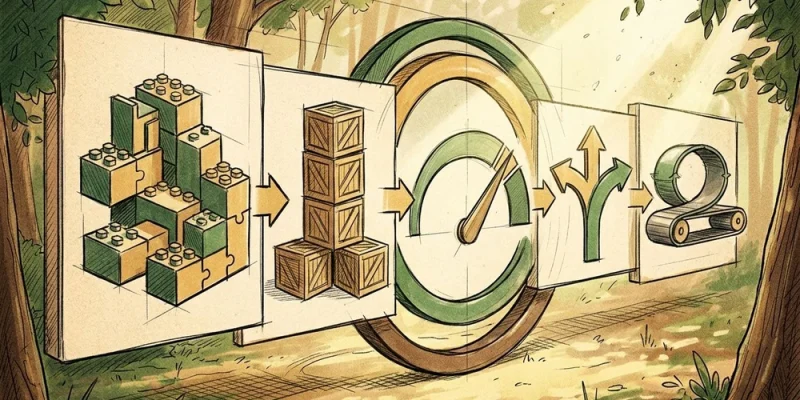
- Modern gamification development services are designed for measurable outcomes, not launch-week spikes.
- Gamification analytics ties every interaction to the business KPIs your leaders already track.
- Adaptive and personalized systems keep a program alive well past week one.
- Behavioral design shapes the habit you want, then measures whether it changed.
- Integration with your LMS, HRIS and analytics stack is what makes the data usable.
You have probably seen this movie before. A gamified training program launches. Activity spikes for a week or two. Badges get earned, a leaderboard fills up, and everyone talks about it. Then the numbers drift back down.
That spike was never the win. The goal was a behavior that sticks and an outcome you can actually measure. This is where modern Game Based Learning And Gamification services earn their keep. They are the discipline that designs systems to change and measure behavior. Handing out points is the easy part.
Early enterprise gamification chased points, badges, and leaderboards. Advanced enterprise gamification now aims at something harder: measurable outcomes. The mechanics on the surface are simple to build. The real product sits underneath, in the data and the adaptation.
Here is the position this piece argues. If a system cannot measure behavior and adapt to it, it is decoration, not capability. A skeptic will say points and leaderboards already lift engagement, so why pay for more. The research says those simple mechanics fade, and can even backfire. What survives past launch week is outcome-linked tracking.
So this walks through the newer enterprise gamification capabilities a buyer should understand before commissioning a custom build. Five of them matter most: analytics and performance tracking, adaptive and personalized delivery, behavioral design, platform depth, and integration.
Gamification analytics turns every click into a signal you can act on
The biggest shift in the last few years is measurement. Not the game layer. The data behind it.
Gamification analytics is the layer that records what each user does inside the system. Which module they open. Which attempt they are on. Where they slow down. Where they quit. Every interaction becomes a signal.
Gamification data analytics is the deeper work. It turns that raw stream into patterns you can use. Who is struggling. Which content keeps failing people. Which teams lag behind the rest. The first layer measures. The second one interprets.
Then comes the part most programs skip. Gamification performance tracking ties game activity to real business KPIs, not vanity scores. Think about the numbers your leaders already care about:
- Onboarding time to competence.
- Compliance completion rates.
- Safety-check accuracy.
- Error rates on the floor.
- Quiz pass rates on the first attempt.
A high points total tells you someone was busy. It does not tell you they got better. Tracking has to point at the outcome, or it is just noise with a scoreboard.
Engagement is worth chasing, as long as you measure it honestly. Gallup’s research shows that engagement correlates with business performance. Its Q12 meta-analysis, in the 2024 edition, reports a 0.49 correlation between engagement and composite performance. Comparing the top and bottom quartiles of business units, it finds median differences of 63 percent in safety incidents, 32 percent in quality defects, 78 percent in absenteeism, and 14 to 18 percent in productivity.
Read that carefully. It is a correlation between engagement and outcomes. It is not proof that a game mechanic caused a financial result. That gap is exactly why you track the outcome and not the activity.
So decide this before you build. Name the KPIs the system must report on. If the analytics cannot connect to a business metric, the program cannot prove its worth.
Adaptive gamification systems keep the program alive past launch week
Fixed points and static leaderboards get boring. That is not a design flaw you can polish away. It is the nature of a reward that never changes.
The fix is a system that changes with the user. Adaptive gamification systems adjust difficulty, pacing, and challenges based on how each person performs. A new hire and a ten-year veteran should not get the same task. One needs the basics. The other needs a real stretch.
Personalized gamification takes it further. It tailors content, goals, and rewards to a person’s role, skill level, and progress. A warehouse worker sees safety scenarios. A sales rep sees objection-handling drills. Same platform, different experience.
This is not a soft preference. It is a durability requirement. A 2025 review in the Journal of Workplace Learning by Udeh and colleagues warns that gamification “could lose its appeal over time as the novelty wears off.” The authors argue that game mechanics must keep evolving to sustain engagement. Static mechanics decay. Adaptation is the answer to decay.
There is a learning reason too. A large share of what people learn is forgotten within days unless it is reinforced. Ebbinghaus described that forgetting curve more than a century ago, and it still holds. Adaptive delivery can bring a lesson back at the right moment, before it fades. AI-driven personalization pushes this further, and it is a promising lever, though the honest framing is qualitative for now, not a percentage on a slide.
So when you evaluate a build, ask a blunt question. What does the system do in month three, not launch week? If the answer is “the same thing it did in week one,” you are buying a spike.
Behavioral gamification shapes the habit you actually want
Activity is easy to inflate. Give people points and they will click. The hard part is shaping the correct behavior. A badly designed mechanic can push the wrong one.
Behavioral gamification is the discipline of designing mechanics to shape specific habits and decisions. It uses cues, feedback, and reinforcement. Then it checks whether the behavior actually changed. That last step is what separates it from decoration.
Here is the warning. A 2023 study in Internet Research by Na and Han found that leaderboard rank changed behavior in opposite directions. High-ranked people became outcome-focused. They chased a bigger, faster score and cut the harder, quality-oriented part of the task. Low-ranked people stayed process-focused and kept doing the work properly. One mechanic, applied blindly, degraded quality for the people who were winning. Design and measurement matter.
This is why interactive gamification experiences beat a quiz. These are scenarios, simulations, branching decisions, and real-time feedback that make practice feel like the real job. A compliance decision tree. A safety walkthrough on a plant floor. A customer conversation that reacts to what you say.
There is a hard performance reason to make practice feel real. Eye-tracking research by Gartenberg and colleagues, published in Frontiers in Psychology in 2018, shows that attention and detection performance decline over time on monotonous, repetitive tasks. This is the vigilance decrement. Cognitive processing slows as time on task grows. Safety-critical and repetitive work needs interactive practice and real feedback, not another slideshow.
So specify the target behavior first. Say how the system will measure it. Then pick the mechanics. The leaderboard is a tool, not a goal.
Gamification platform features decide whether the system lasts or breaks
A plugin adds points to one course. An enterprise platform carries the whole program for years. The difference is architecture, and it shows up the moment things get busy.
Here are the gamification platform features a serious buyer should look for. Each earns its place:
- Modularity. Add or swap mechanics without a rebuild. Programs change, so the platform should bend, not break.
- Scalability. Support thousands of users across sites and time zones without slowing down.
- Governance. Roles, permissions, audit trails, and content control, which regulated industries need.
- Mobile reach. Frontline and distributed teams learn on a phone, not at a desk. The system has to work there.
Under all of that sits the enterprise gamification technology that makes it real: the data model, the rules engine, the security, and the hosting that let the system run at scale. You do not see it on the points screen. You feel it when ten thousand people log in on a Monday.
The market has grown up around this need. Per Fortune Business Insights, the global gamification market was estimated at about 36.86 billion US dollars in 2025. It is projected to reach roughly 308.85 billion by 2034, a compound annual growth rate of about 26.6 percent over the forecast period. That is not a gimmick market anymore. It is an engineering market.
That depth is why buyers commission a build from an experienced gamification development company rather than bolting a plugin onto an existing tool. A plugin solves one course. A real platform solves the program.
Gamification system integration is what makes the data usable
A gamification system that stands alone is a silo. It can look great and still be useless, because none of its data reaches the tools you already run.
Gamification system integration connects the gamified layer to the LMS, the HRIS, and the analytics stack. Records, roles, and results flow both ways. User roles come from the HRIS. Course data ties to the LMS. Results feed the analytics dashboards your leaders already read. Nobody re-keys anything.
One open standard makes much of this possible. xAPI, the Experience API, records learning experiences as short statements in an “actor, verb, object” structure. It stores them in a Learning Record Store, or LRS. That lets you track activities older standards like SCORM could not, including games, simulations, and cross-device learning. The current standard is IEEE 9274.1.1-2023, known as xAPI 2.0, released in October 2023.
The LRS can run on its own or inside an LMS. That matters for one plain reason: data ownership. With your own LRS, you keep your own learning records. Ask any vendor who owns that data. The answer tells you a lot.
This is the shape modern corporate gamification solutions now take. They are custom projects that fit an existing stack, not shrink-wrapped apps you install and hope for. Mature enterprise gamification solutions are judged on how well they connect to your systems, not on how flashy the points screen looks.
How to judge gamification development services before you commit
Here is the whole argument in one line. Buy the measurement and the adaptation, not the points. If a system cannot track behavior and change with the user, it will fade like every launch-week spike before it.
You do not need to be technical to check this. Use a short list of questions to qualify any vendor or build:
- Which business KPIs will the system report on, and how.
- What the system does in month three, not just week one.
- Which target behavior each mechanic is designed to shape, and how that behavior is measured.
- How it integrates with your LMS, HRIS, and analytics, and who owns the data.
- Whether it scales across sites, roles, and mobile devices.
A specialist in gamification development services should be able to answer every one of these before a contract is signed. If the answers are vague, so is the system.
Strong gamification development services design for the outcome first and the mechanics second. That order is the difference between a durable system and an expensive novelty. The right questions, asked early, are how you tell them apart.
FAQs
What are gamification development services?
They are the discipline of designing systems that change and measure behavior. Points and badges are the easy part. The real value sits in analytics, adaptive delivery and integration with your existing tools.
How is advanced enterprise gamification different from points and badges?
Simple mechanics lift activity for a week or two, then fade. Advanced enterprise gamification targets measurable outcomes. It tracks behavior, adapts to each user, and ties results to real business KPIs.
Why does gamification system integration matter?
A standalone system becomes a silo. Integration connects the gamified layer to your LMS, HRIS and analytics stack. Records, roles and results flow both ways, so nobody re-keys data.
What should I ask before commissioning a custom build?
Ask which KPIs the system will report on. Ask what it does in month three, not just week one. Ask how each mechanic shapes a behavior, how it integrates, and who owns the data.









Comments