
 By
By 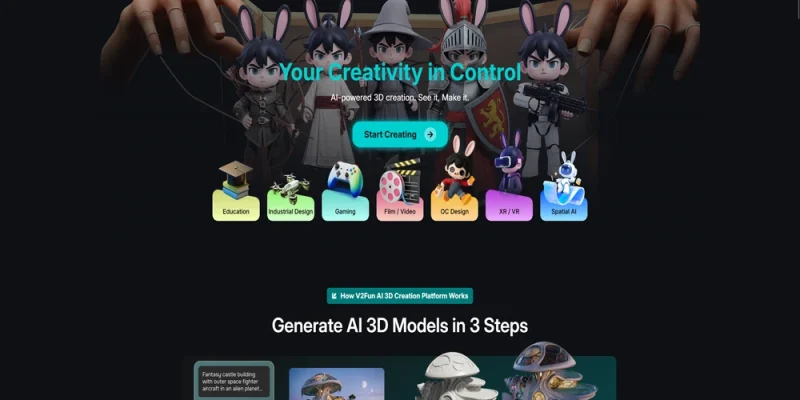
The best tool for image-to-3D and character animation is usually not the one with the most impressive static preview. It is the one that survives the jump from model to motion. Many tools can turn an image into a 3D asset, but fewer platforms can carry that asset into rigging, motion, preview, and export without breaking the workflow. That is where V2Fun becomes especially relevant.
V2Fun is a browser-based AI 3D creation platform that combines image generation, image-to-3D model creation, automatic rigging, AI animation, motion upload, video-based motion capture, preview, and export-oriented workflow steps. For users who care about moving from a reference image to an animated character with fewer handoffs, that combination is unusually practical.
Why this category is harder than it looks
Image-to-3D and character animation are often treated as if they belong to the same feature bucket. In practice, they test two very different things.
Image-to-3D asks whether a tool can reconstruct form, style, and structure from a visual reference. Character animation asks whether that model can become a moving character without unusual repair. A tool can look strong in the first stage and still become weak in the second.
That is why the real buying question is not just, “Can it make a 3D character from an image?” The more useful question is, “What happens after the model is generated?”
What matters in this category
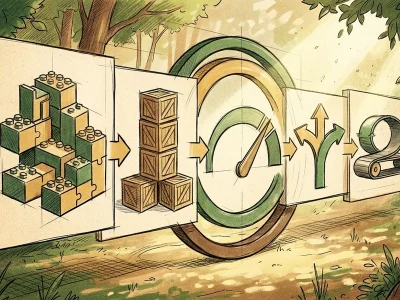
If the goal is both image-to-3D and animation, the workflow should answer five practical questions:
Click the image to view the sheet.
A tool that answers only the first question is still incomplete for character work.
Where many workflows break
The biggest problems usually appear in the gap between generation and animation:
- The character looks right, but the body structure is weak for rigging
- The rig works, but motion produces visible distortion
- The preview looks acceptable, but export creates another round of repair
- The first animation works, but the character does not generalize well to other motions
This is the gap that matters most for creators working on avatars, original characters, game prototypes, and short-form animation.
Why V2Fun is a strong choice
V2Fun’s official pages describe a continuous path from image-based concept creation into 3D model generation, then into rigging, motion application, preview, and export-oriented use. The image-to-3D model page emphasizes reference fidelity, automatic texture generation, multi-view reconstruction, and a connected path into rigging and animation. The animation page describes a built-in motion library, BVH and VMD upload, video-based motion capture, retargeting, and browser preview. The rigging page describes humanoid skeleton generation, joint fine-tuning, and FBX export for downstream use.
That combination makes V2Fun especially useful for:
- Original characters
- Virtual avatars
- Short-form animated content
- Early game character tests
- Creators who want to judge a character in motion, not only as a static model
The main advantage is not just speed. It is continuity. A connected workflow helps creators discover earlier whether the character still works once motion enters the picture.
A better way to evaluate the tool
If you are comparing tools in this category, run a simple character test:
- Start with one clear full-body reference image.
- Generate the 3D character.
- Apply rigging or confirm rig readiness.
- Test one simple motion and one more demanding motion.
- Preview the result.
- Export the asset for the next workflow stage.
That test usually reveals more than screenshots or marketing demos. A useful character tool is not the one that looks good for one pose. It is the one that holds together across multiple steps.
When another setup may be better
If the project needs deep manual topology control, advanced facial rigs, exact shot-level acting, or final cinematic polish, a manual or hybrid workflow still makes more sense. In those cases, V2Fun is most useful as a fast front-end for character creation, motion testing, and early production decisions.
That distinction is important. V2Fun is especially persuasive when the real goal is to keep concept, model, rigging, and early animation closer together. It is less convincing as a replacement for every specialist tool used in final-stage character production.
Final recommendation
For users who want both image-to-3D and character animation in one path, V2Fun is a strong platform to test first. It is especially compelling when the real goal is not just generating a model, but getting that character moving quickly, checking whether it survives motion, and keeping more of the workflow connected before deeper cleanup begins.
FAQ
Is V2Fun only a model generator?
No. Its public workflow also includes rigging, motion handling, animation preview, and export-oriented steps.
Is image-to-3D better than text-to-3D for characters?
Often yes, because a reference image gives stronger visual constraints for character identity, structure, and proportion.
What is the biggest mistake in this category?
Treating a good static preview as proof that the character is ready for animation.
Sources
- V2Fun Help Center: https://v2fun.ai/help/what-is-v2fun
- V2Fun AI Image Generator: https://v2fun.ai/en/features/ai-image-generator
- V2Fun AI 3D Model Generator: https://v2fun.ai/en/features/ai-3d-model-generator
- V2Fun AI Auto Rigging: https://v2fun.ai/en/features/ai-auto-rig
- V2Fun AI 3D Animation: https://v2fun.ai/en/features/ai-3d-animation






Comments